
Case Converter: The Complete Guide to Changing Text Case Online
Text formatting is an important part of writing, publishing, programming, marketing, education, business communication, and everyday computer use. Something as simple as whether a word is written in uppercase or lowercase can affect how professional, readable, and appropriate a piece of text appears.
However, changing the capitalization of a large amount of text manually can be frustrating and time-consuming.
Imagine receiving an entire paragraph written in UPPERCASE when you actually need it in normal sentence case. Alternatively, you may have a list of product names that needs to be converted to title case, or a developer may need to convert ordinary text into a programming format such as camelCase.
Instead of changing every letter manually, users can turn to a case converter.
A case converter is an online text utility that changes the capitalization of text according to the format selected by the user. Common options include uppercase, lowercase, sentence case, title case, capitalized case, alternating case, and inverse case. Some more advanced tools also support programming-oriented formats such as camelCase, PascalCase, snake_case, and kebab-case.
For visitors to a website such as therabbbithole.co.za, a case converter can be a useful everyday productivity tool, whether they are writers, students, developers, business owners, marketers, website administrators, or simply people who need to correct text quickly.
What Is a Case Converter?
A case converter is a tool that changes the capitalization—or “case”—of letters in a piece of text.
For example:
Original:THIS IS MY TEXT
Lowercase:this is my text
Sentence case:This is my text
Title Case:This Is My Text
Capitalized Case:This Is My Text
The exact result depends on the rules used by the particular converter.
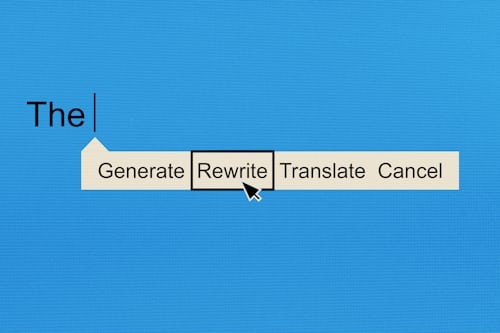
Most online case converters work by allowing users to paste or type text into an input box and then select the desired conversion option. The converted text can then be copied or downloaded for use elsewhere.
Why Would Website Visitors Need a Case Converter?
Visitors to therabbbithole.co.za don’t have to be professional writers or programmers to benefit from a case converter.
People encounter incorrectly formatted text constantly.
For example, someone may accidentally leave Caps Lock enabled while typing an email. Someone copying information from a PDF may receive text with inconsistent capitalization. A blogger may need to transform a headline into title case, while an online seller may need to standardize product names.
A case converter can solve these problems in seconds.
It can be particularly useful for:
- Students
- Writers
- Bloggers
- Copywriters
- SEO professionals
- Social media managers
- Online sellers
- Programmers
- Web developers
- Office administrators
- Researchers
- Teachers
- Business owners
- Digital marketers
This makes a case converter useful even for people who don’t use social media or e-commerce platforms.

Common Case Conversion Options
Different case converters offer different functions, but several formats are particularly common.
1. UPPERCASE
Uppercase converts every applicable letter into capital letters.
Example:
welcome to my website
becomes:
WELCOME TO MY WEBSITE
Uppercase can be useful for:
- Headings
- Labels
- Short notices
- Emphasis
- Certain forms and documents
However, using large amounts of uppercase text in normal paragraphs can make content harder to read.
2. lowercase
Lowercase converts letters into small letters.
Example:
WELCOME TO MY WEBSITE
becomes:
welcome to my website
This can be useful when standardizing data, preparing certain technical text, or correcting accidentally capitalized content.
3. Sentence Case
Sentence case is commonly used for ordinary sentences and paragraphs.
Example:
THIS IS A SAMPLE SENTENCE. HERE IS ANOTHER ONE.
becomes:
This is a sample sentence. Here is another one.
This is particularly useful when someone has accidentally typed an entire paragraph using Caps Lock.
Some converters automatically identify sentence boundaries and capitalize the first letter accordingly.
4. Title Case
Title cases are commonly used for:
- Blog titles
- Article headings
- Book titles
- Section headings
- Marketing headlines
For example:
how to make money online
could become:
How to Make Money Online
Title-case rules can differ between tools, particularly regarding short words such as “and,” “of,” “the,” and “to.” Some converters specifically apply title-style capitalization rules rather than simply capitalizing every word.
5. Capitalized Case
Capitalized case generally makes the first letter of each word uppercase.
For example:
online image compression tool
becomes:
Online Image Compression Tool
This can be useful when formatting lists, labels, names, headings, and product titles.
6. Alternating Case
Alternating case switches between lowercase and uppercase characters.
For example:
hello world
could become:
hElLo WoRlD
This is generally used for creative or stylistic purposes rather than professional writing.
7. InVeRsE CaSe
Inverse case switches the existing capitalization of characters.
For example:
Hello WORLD
could become:
hELLO world
This can be useful when correcting text whose capitalization has been accidentally reversed or manipulated.
8. camelCase and Other Developer Formats
Some advanced case converters provide formats intended for programmers.
Examples include:
camelCasePascalCasesnake_casekebab-caseCONSTANT_CASE
These options can be particularly valuable when developers are naming variables, functions, files, database fields, CSS classes, or other programming elements. Current online tools such as QuickTooly advertise several of these programming-oriented formats alongside ordinary capitalization styles.
Why a Case Converter Is Useful for Bloggers
Bloggers frequently work with titles, headings, subheadings, captions, product names, and large amounts of copied text.
A case converter can help bloggers standardize content quickly.
For example, if a collection of article titles has been entered inconsistently:
10 WAYS TO SAVE MONEY
how to start an online business
BEST JOBS FOR REMOTE WORKERS
The titles can be transformed into a consistent format.
This can make a website appear more organized and professional.
Case Conversion for SEO
Case conversion can also help SEO professionals organize content.
For example, marketers may have hundreds of keywords that have been collected from different sources.
One source might provide:
ONLINE JOBS
another:
Online Jobs
and another:
online jobs
A case converter can standardize the capitalization of these lists.
However, it’s important to understand that changing capitalization itself does not automatically improve a page’s search-engine ranking. Its main benefit is consistency, readability, and easier content management.
Case Conversion for E-Commerce
Online sellers often manage large numbers of product names and descriptions.
A seller may need to transform:
WIRELESS BLUETOOTH HEADPHONES
into:
Wireless Bluetooth Headphones
before using it as a product title.
This can save considerable time when dealing with hundreds of products.
A case converter can also help standardize categories, labels, promotional text, and internal product records.

Case Conversion for Students
Students regularly copy information from:
- Books
- PDFs
- Websites
- Research papers
- Notes
- Spreadsheets
The resulting text may have inconsistent capitalization.
Rather than manually correcting every word, students can paste the material into a case converter and choose an appropriate format.
It can be especially useful when preparing headings, lists, notes, or presentation material.
Case Conversion for Developers
Developers have some of the most specialized uses for case conversion.
Programming languages and development environments frequently use naming conventions.
For example:
Camel case:
customerAccountNumber
Pascal case:
CustomerAccountNumber
Snake case:
customer_account_number
Kebab case:
customer-account-number
Rather than manually rewriting every identifier, a developer can use a suitable conversion tool to speed up the process.

Advantages of Using a Case Converter
1. Saves Time
Changing the capitalization of hundreds or thousands of words manually can be extremely tedious.
A case converter can process large blocks of text in seconds.
2. Reduces Manual Errors
Typing or editing text repeatedly creates opportunities for spelling and formatting mistakes.
Automating capitalization reduces unnecessary manual work.
3. Improves Consistency
Consistent capitalization makes documents, websites, product catalogs, and lists look more professional.
4. Easy to Use
Most online case converters require only three basic steps:
- Paste the text.
- Select the desired case.
- Copy the result.
Several current tools use essentially this workflow.
5. Useful Across Different Professions
A case converter isn’t restricted to one industry.
It can be used by:
- Writers
- Developers
- Teachers
- Students
- Marketers
- Business professionals
- Researchers
- E-commerce sellers
6. Works With Large Blocks of Text
Instead of changing individual words, users can generally paste entire paragraphs, lists, or documents into the converter.
7. Convenient for Mobile Users
Browser-based tools can be useful when someone needs to correct text from a smartphone or tablet rather than a desktop computer.
Disadvantages of Using a Case Converter
Although case converters are convenient, users should understand their limitations.
1. They Don’t Understand Meaning Perfectly
A converter changes capitalization according to rules. It generally doesn’t understand the deeper meaning of the text.
For example, automatically capitalizing every word isn’t necessarily appropriate for every title.
2. Proper Names May Need Checking
A case converter may not know that a particular word is a person’s name, company name, product name, or brand that uses unusual capitalization.
For example, brands may intentionally use combinations such as
- eBay
- iPhone
- YouTube
Automatic conversion could change these into a format that isn’t officially correct.
3. Acronyms Can Be Affected
Acronyms such as
NASA
HTML
SEO
and API
may be changed incorrectly by some conversion methods.
Always review converted text before publishing.
4. Different Tools Use Different Rules
Title case, sentence case, and capitalized case can be interpreted differently by different tools.
Therefore, important content should always be checked after conversion.
5. It Doesn’t Replace Proofreading
Changing capitalization doesn’t automatically correct:
- Spelling
- Grammar
- Punctuation
- Facts
- Sentence structure
A case converter is a formatting tool, not a complete writing editor.
How to Use the Case Converter on Therabbbithole.co.za
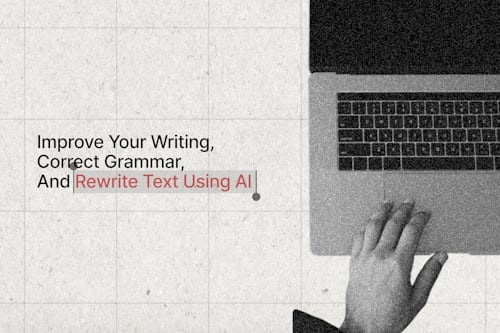
The Case Converter available on therabbbithole.co.za can be used to transform text into the case format required for a particular task.
The basic process is straightforward.
Step 1: Prepare Your Text
Find the text you want to convert.
It could be:
- A paragraph
- A blog title
- A list
- Product names
- A social media caption
- Website content
- Programming text
Step 2: Copy and Paste
Copy the text and paste it into the Case Converter on therabbbithole.co.za.
If you are working on a mobile device, you can also type or paste the content directly into the tool.
Step 3: Select the Desired Case
Choose the case format you need.
For example:
UPPERCASE—for capital letters.
lowercase—for small letters.
Sentence case—for normal sentences.
Title Case—for headings and titles.
Capitalized Case—for capitalizing words.
If the tool provides additional conversion formats, you can select the format appropriate to your task.
Step 4: Review the Converted Text
Before using the result, check important names, acronyms, trademarks, abbreviations, and technical terms.
This is particularly important for professional or published content.
Step 5: Copy the Result
Copy the converted text and paste it wherever you need it.
It can be used in:
- Microsoft Word
- Google Docs
- WordPress
- Social media
- E-commerce listings
- Emails
- Spreadsheets
- Programming projects
- Presentations

Top 10 Online Case Converter Sites
There are numerous case-conversion tools available online. Here are nine reputable options to consider, followed by therabbbithole.co.za as the tenth.
1. ConvertCase.in
ConvertCase.in provides several common conversion formats, including sentence case, lowercase, uppercase, capitalized case, title case, alternating case, and inverse case.
2. Convertcase.io
Convertcase.io offers common case transformations and allows users to paste text, select a conversion, and copy or download the result.
3. QuickTool
QuickTooly Case Converter provides traditional case conversions as well as developer-oriented formats such as camelCase, PascalCase, snake_case, and kebab-case.
4. Quick Case Converter
Quick Case Converter provides uppercase, lowercase, title case, and sentence-case conversion through a straightforward online interface.
5. InstantTextTool
InstantTextTool Case Converter provides uppercase, lowercase, title case, sentence case, capitalized, and alternating case options.
6. Online-Convert
Online-Convert Case Converter offers several text-case transformations, including uppercase, lowercase, title case, sentence case, mixed case, and inverse case.
7. TheCaseConverter.in
The CaseConverter.in provides conventional capitalization options as well as programming-oriented conversions such as camelCase, snake_case, kebab-case, and PascalCase.
8. Case Modify
Case Modify offers uppercase, lowercase, title case, sentence case, alternating case, inverse case, and additional text-styling functionality.
9. CaseConvertApp
CaseConvertApp provides uppercase, lowercase, sentence case, capitalize case, alternating case, and inverse-case options, along with other text-processing functions.
10. Therabbbithole.co.za
The Case Converter on therabbbithole.co.za can serve as a convenient text-formatting utility for visitors who need to change capitalization without manually editing every letter.
Whether someone needs to convert an entire paragraph to lowercase, turn a heading into title case, correct accidentally capitalized text, or prepare text for another application, a browser-based case converter can make the task considerably faster.
For website visitors, the biggest advantage is convenience: rather than installing specialized software or manually correcting large amounts of text, they can use an online utility whenever the need arises.

Best Practices When Using a Case Converter
To get the best results, don’t simply convert and immediately publish your text.
Instead:
Keep the Original
Always keep a copy of your original text before converting it.
Choose the Right Case
Use sentence case for normal prose, title case for appropriate headings, and uppercase only where it serves a genuine purpose.
Check Brand Names
Manually verify company names, products, websites, and trademarks.
Check Acronyms
Make sure terms such as SEO, HTML, API, and other abbreviations haven’t been changed incorrectly.
Proofread Afterwards
Case conversion only changes capitalization. It doesn’t check whether the text is grammatically correct or factually accurate.
Case Converter vs. Manual Editing
Manually changing capitalization can work for a short sentence.
However, it becomes inefficient when dealing with hundreds or thousands of words.
Consider a 2,000-word document accidentally written in uppercase.
Manually correcting every letter would be extremely tedious.
A case converter can process the entire block almost instantly.
This is one reason these tools have become useful productivity utilities for writers, students, developers, marketers, and other professionals.
Final Thoughts
A case converter may be a simple online tool, but it can solve a surprisingly large number of everyday text-formatting problems.
From fixing accidental Caps Lock mistakes to formatting blog headlines, standardizing product names, preparing SEO content, organizing business information, and converting programming identifiers, changing text case can save significant time when done automatically.
Visitors to therabbbithole.co.za can use a case converter whenever they need to transform text into a different capitalization style, regardless of whether they are using social media, e-commerce platforms, websites, or none of them.
The most important thing to remember is that automated case conversion is a formatting aid—not a replacement for human review. Proper names, acronyms, trademarks, technical terminology, and unusual capitalization should always be checked before the final text is published.
Used correctly, however, a case converter provides a fast, convenient, and accessible way to turn incorrectly formatted text into something much more consistent and usable.